 GitHub
Delegate in parallel. Stay the decision-maker.#
A coordinator agent splits a goal into independent tasks, starts worker agents beside you, answers their questions, and gathers what they finished. You still inspect and review every change.
- 01Split the work
- 02Answer worker questions
- 03Gather results, then review
Talk through the task. Edit before it is sent.#
Dictate to Pi when typing is slower than saying it. Speech becomes text in the message box, so you can read or edit the request before you send it. On macOS, ⌃⌥Z starts and stops dictation.
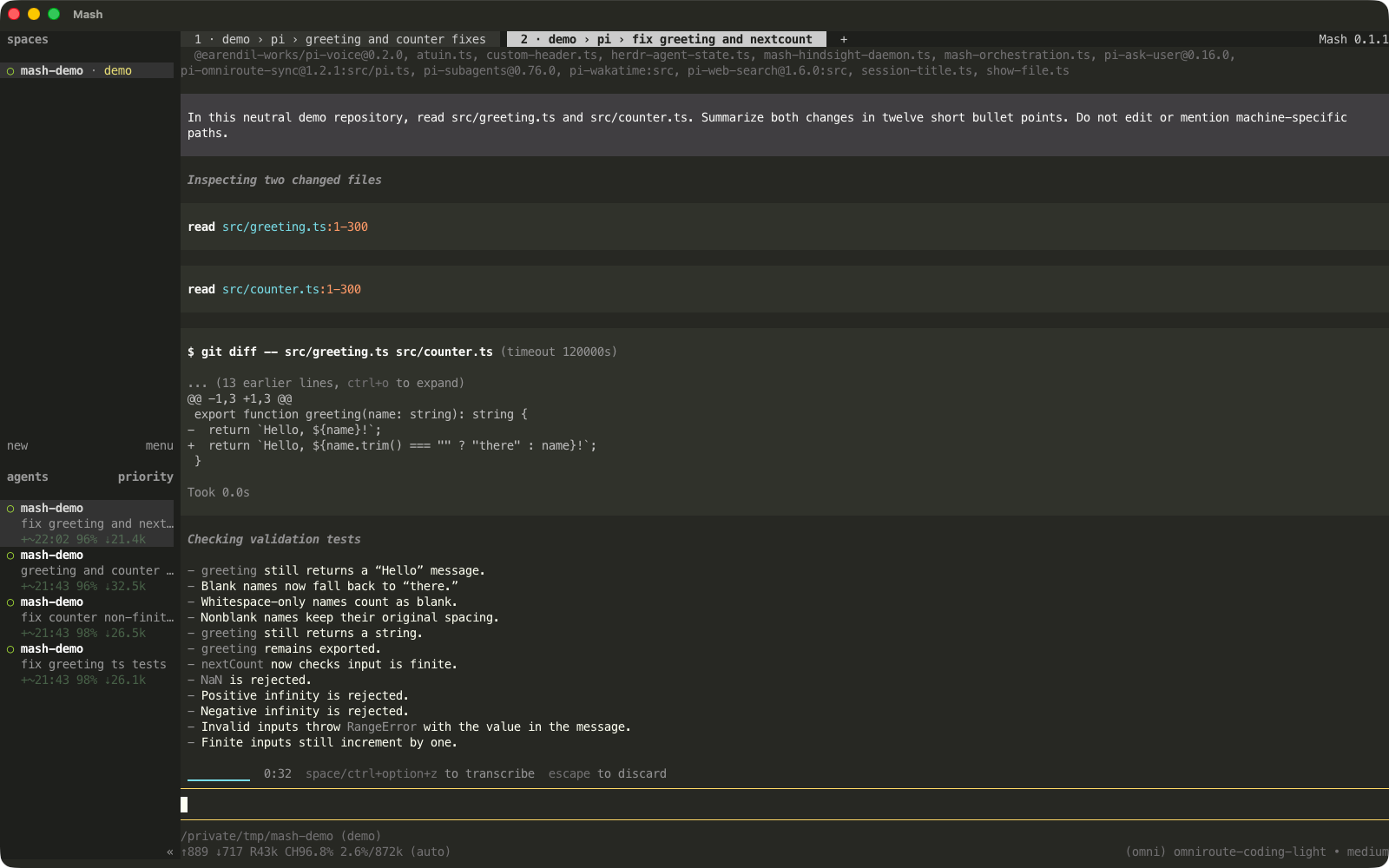
Start dictation
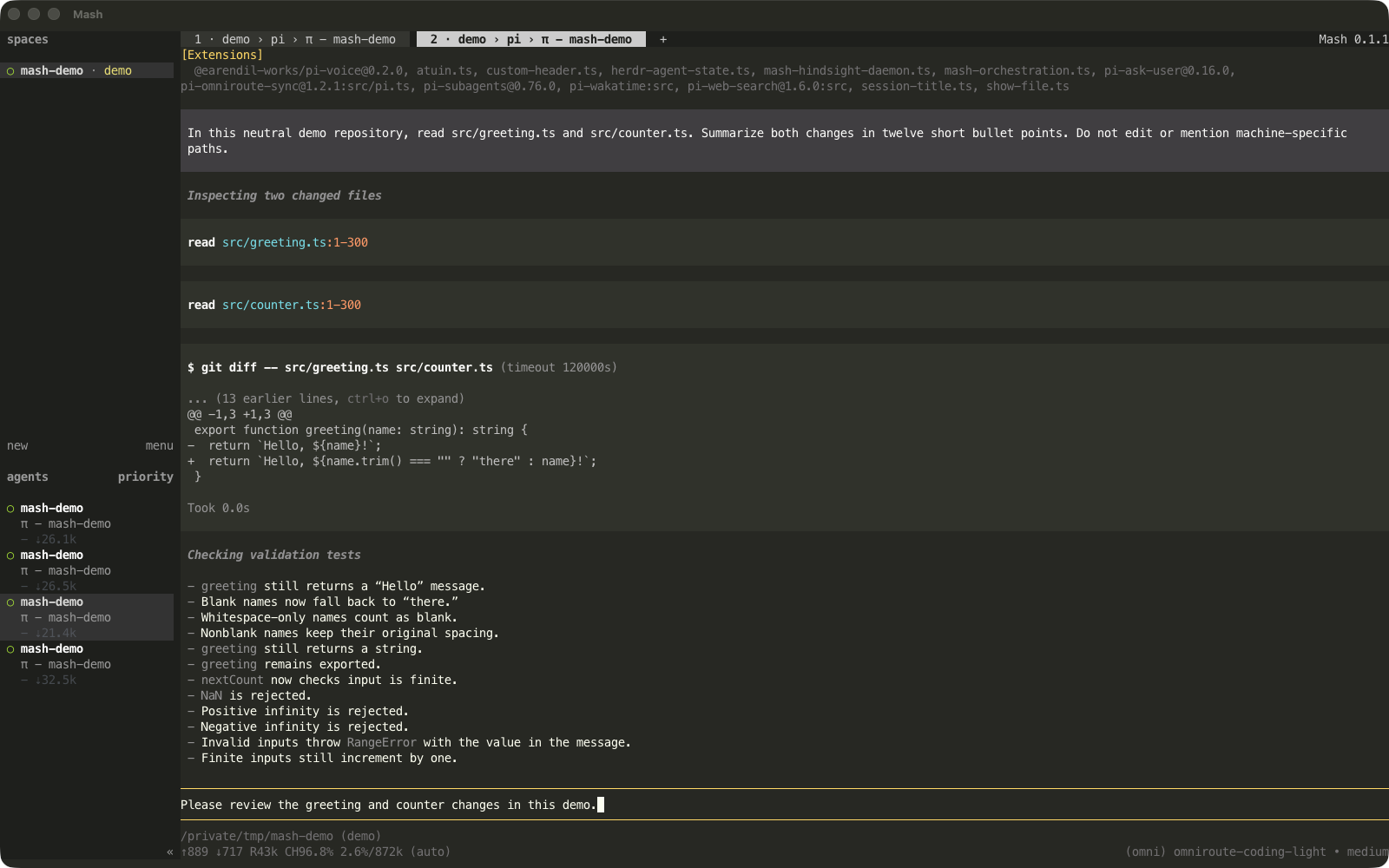
Check the text
Shortcuts below are the macOS keys. Mash ships a Linux keymap too, and the in-app keybinding sheet always shows the keys for the machine you are on.
Nothing to assemble.#
Most agentic setups are a weekend of wiring: an agent, a workspace manager, a set of skills, a keybinding file. Mash ships them already fitted together and opens on a workspace you can type in.
- Herdr, Ghostty, Starship, Pi, Fresh shipped inside the app, with the Mash skills that teach the workflow
- First launch sets your Git identity, GitHub sign-in, and the tooling you pick
- ~/.mash holds Mash's own state, and your existing configs stay as they are
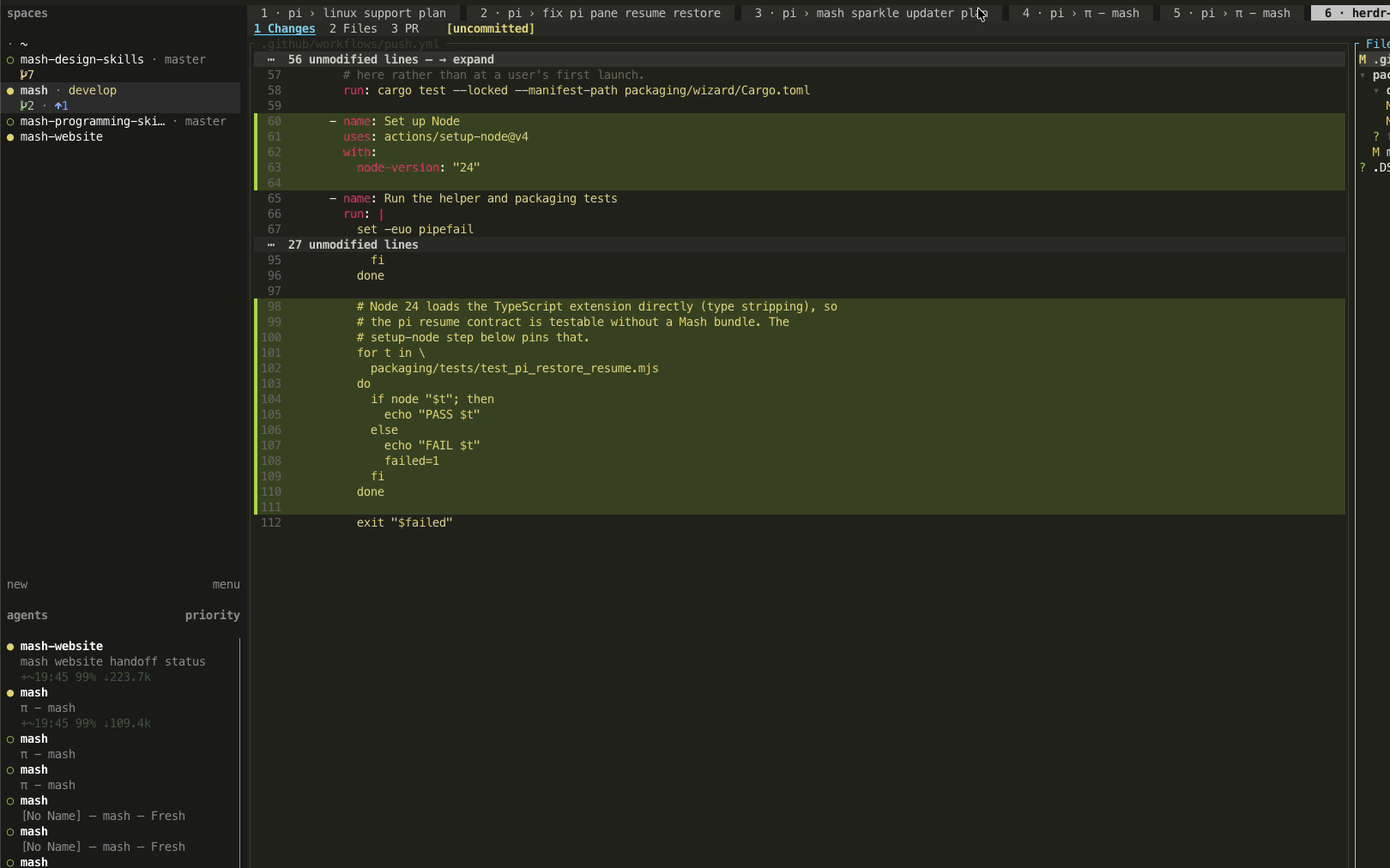
One task, one workspace.#
Each task gets its own workspace with its own tabs, terminals, and agent, so separate projects never pile into one window. Move between workspaces and agents from the keyboard while the rest keep running.
- ⌘⌃N new workspace
- ⌘⌃1–9Ctrl Alt ⇧ 1–9 switch to workspace N
- ⌃⇧↑ ⌃⇧↓Ctrl ⇧ ↑ Ctrl ⇧ ↓ previous and next agent
- ⌘⌃GCtrl Alt ⇧ G session navigator
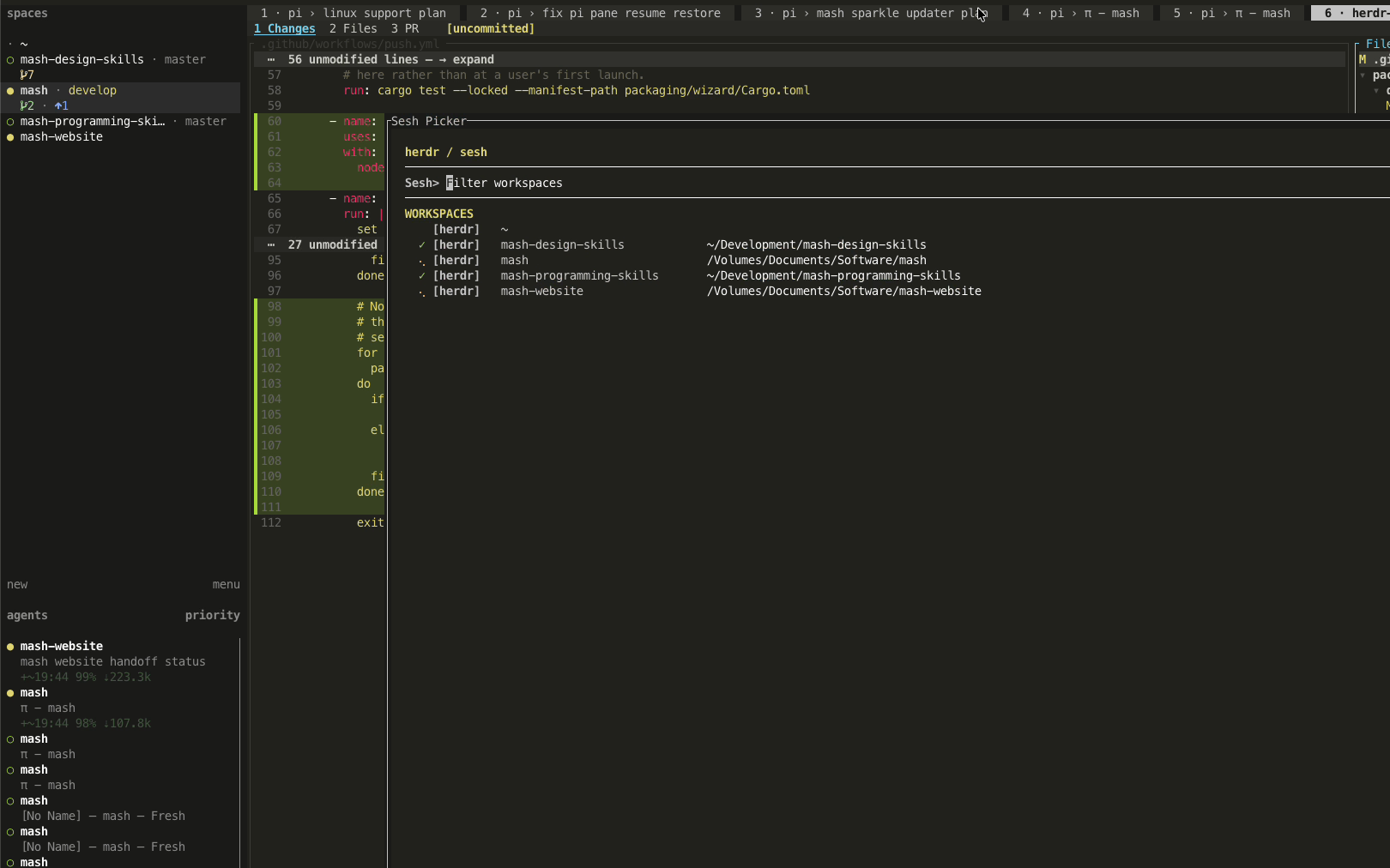
The code stays yours.#
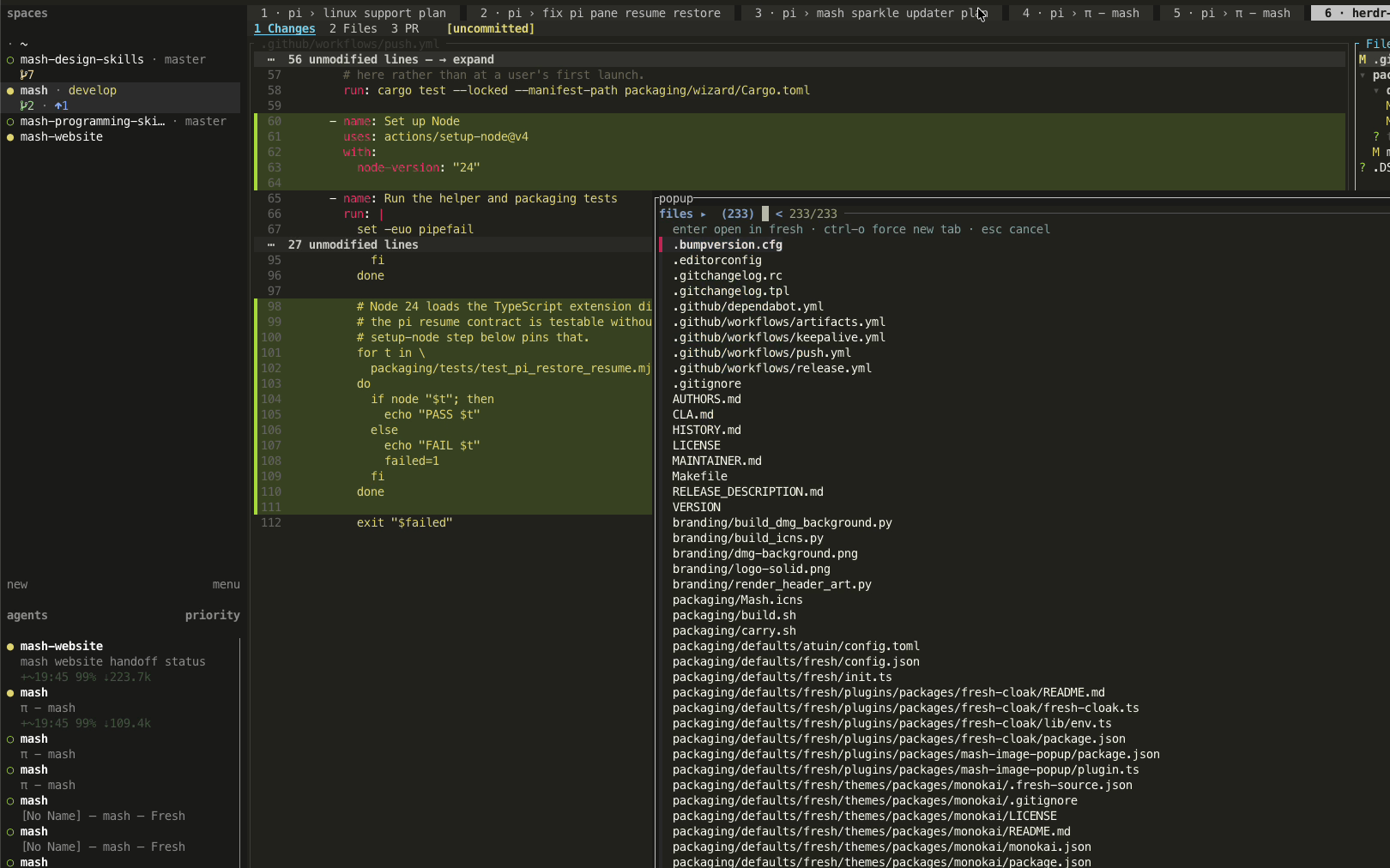
The agent works in a pane beside the file, not behind a chat window. Open the buffer, make the change yourself, and the agent picks up from what is on disk.
- ⌘T dev tab with the editor and an agent
- ⌘P file finder
- ⌥GAlt G pick a link or an ID out of the agent's output
- ⌃⇧GCtrl ⇧ G source control
Speed still ends in a human review.#
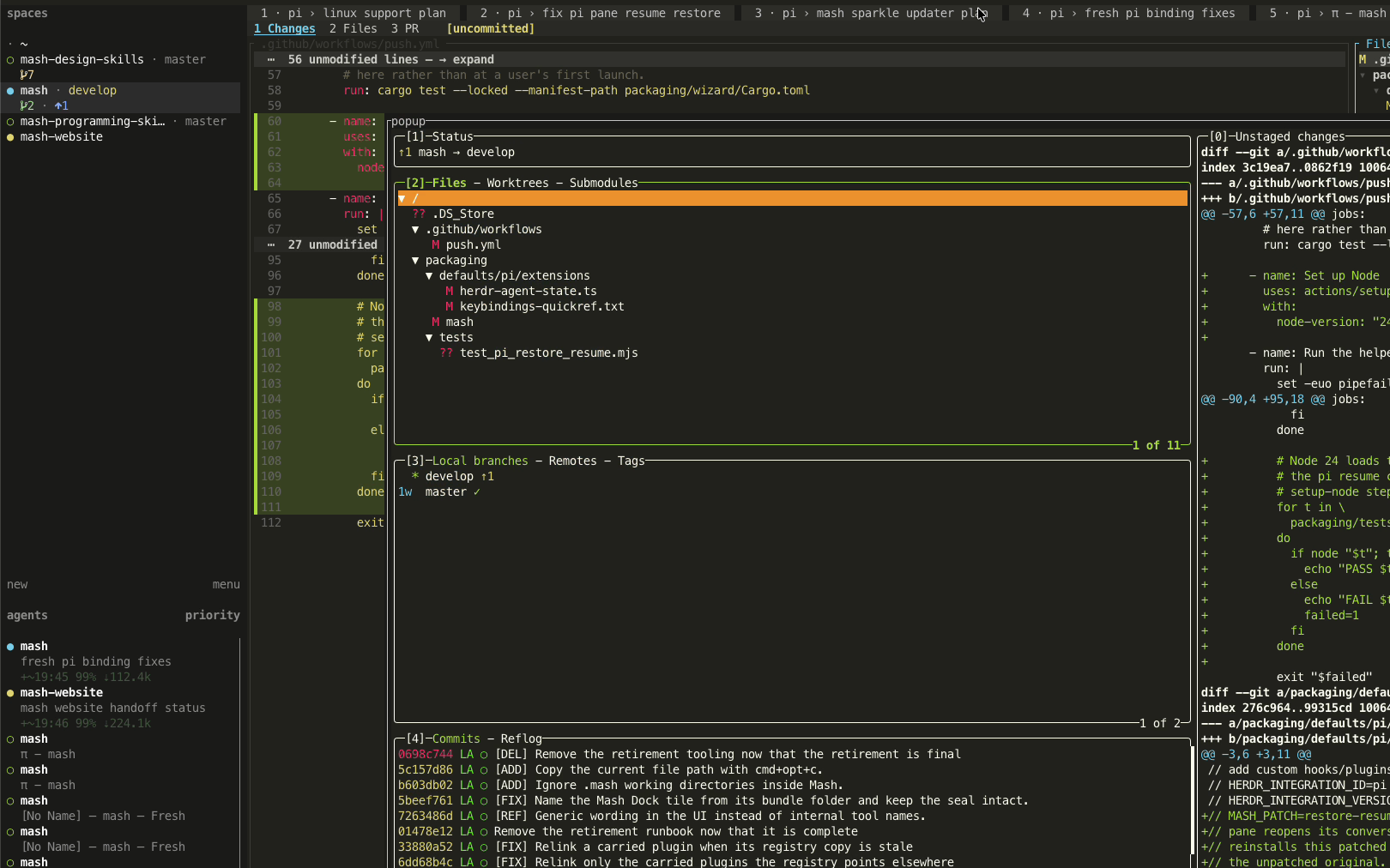
Agents propose and you decide what lands. Open a review tab for the branch, read the diff, and act on it hunk by hunk before anything is committed.
- ⌘⇧RCtrl ⇧ R review tab, with the diff and an agent together
- ⌘KCtrl Alt K annotate a capture for the review
- ⌘⌥YCtrl Alt Y fork an agent from one of its messages
Everything is a keystroke away.#
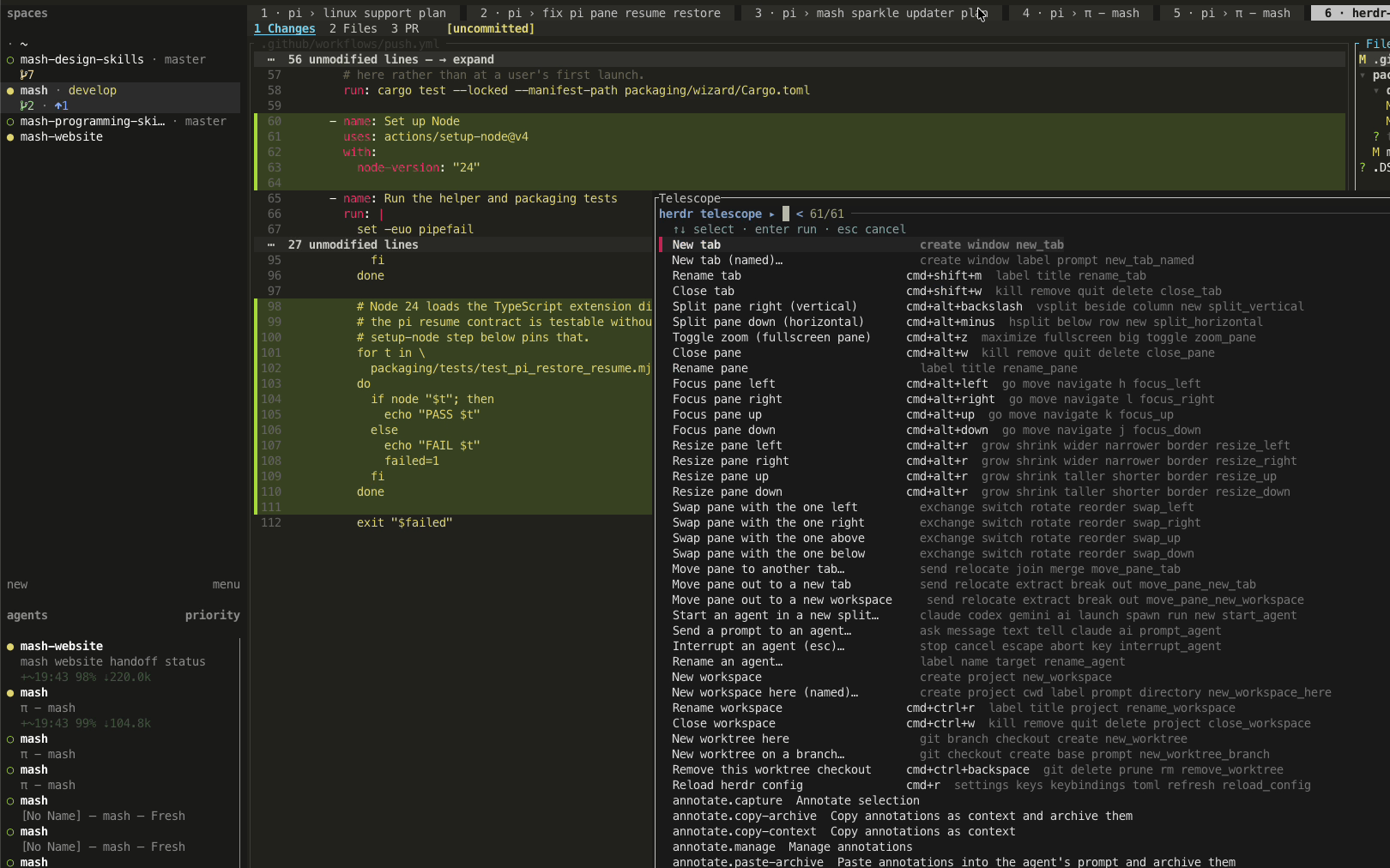
Workspaces, tabs, panes, agents, search, and review all have keys, and the command palette holds the rest. Learn a handful and the app shows you the others as you go. The mouse works too.
- ⌘⇧PCtrl ⇧ P command palette
- ⌘⌥L search every session
- ⌘ICtrl Alt I settings
- ⌘⇧ICtrl ⇧ I the keybinding sheet
Intent in, reviewed result out.#
One task, followed all the way through the app: an idea becomes a workspace, agents work beside the code, a human fixes something by hand, the diff is reviewed, and the change lands.
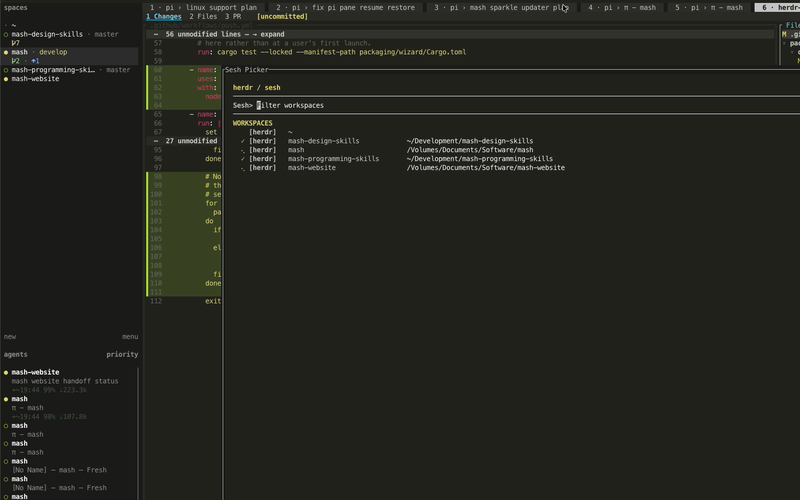
A workspace per task
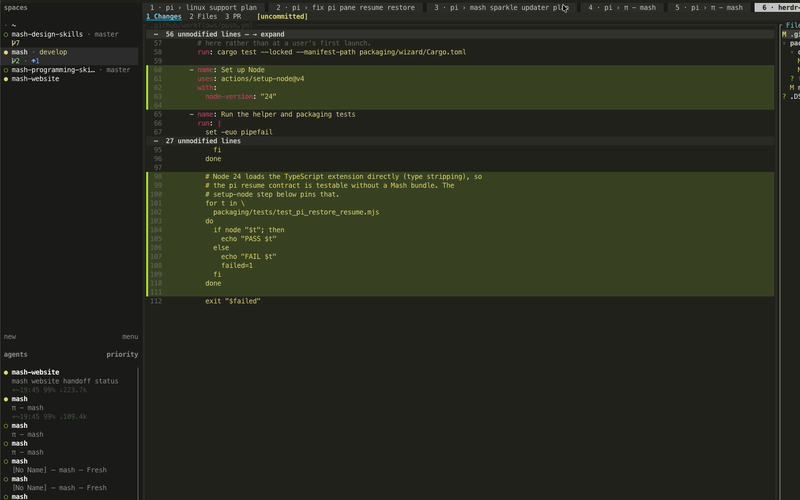
Agents beside the code
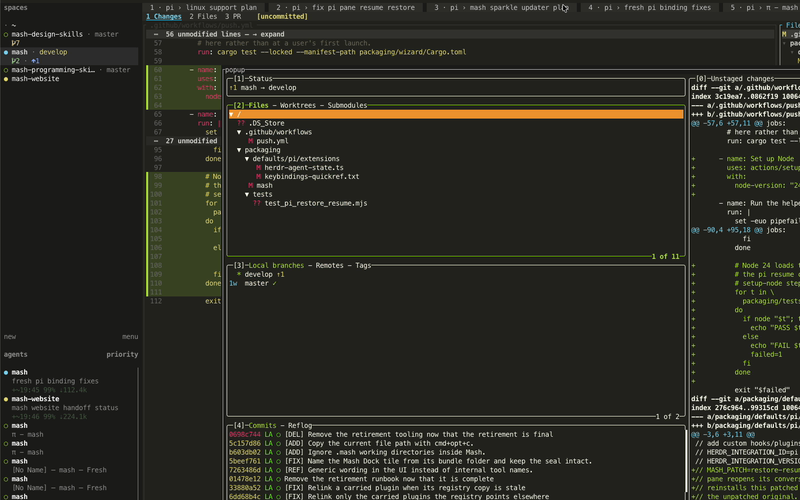
Changes under review
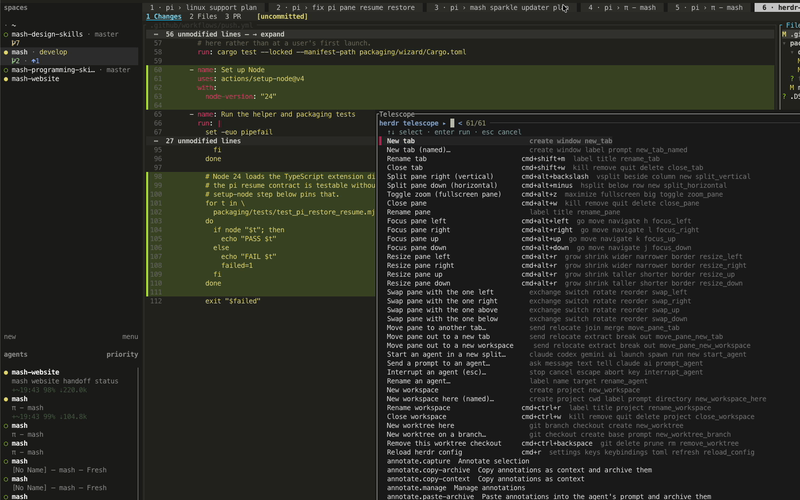
Commands at hand
One download. Nothing to assemble.#
Mash 0.5.1 for macOS and Linux. Install it, and the first launch sets up Git, your agent, and the skills.
Mash 0.5.1 for macOS#
Download Mash 0.5.1 for macOSApple silicon · DMG · checksums in the release notes
- Apple silicon Mac, macOS 14 or later
- One DMG, signed and notarized
Mash 0.5.1 for Linux#
.deb packages · checksums and attestations in the release notes
- Ubuntu 24.04 with GNOME, on Wayland or Xorg
- One .deb for amd64 or arm64, with build attestation
And the rest is already there.#
- Agent orchestration: a coordinator delegates tasks to worker agents and gathers their results
- Pi Voice dictation into an editable message
- Workspaces and worktrees, one task each
- A coding agent in every workspace
- Editor and agent in the same tab
- Review tabs, with the diff beside the agent
- Command palette and fuzzy file finder
- Session search across every agent conversation
- Source control, annotations, and pane splits
- Plugin manager and detachable sessions
- macOS on Apple silicon, and Linux on amd64 or arm64
The short answers.#
What is Mash?
Mash is a single application that bundles a complete agentic coding environment: Herdr for workspaces, tabs, and agents; Ghostty for the terminal; Starship for the shell prompt; Pi for the coding; Fresh for the editing; and the Mash skills that teach the workflow. It arrives already configured rather than asking you to assemble those tools yourself.
Is Mash free?
Yes. Mash is free and open source under the GPL-3.0-or-later license, with no Mash account, subscription, or in-app purchase. Pi needs a model provider you choose (OpenAI, Anthropic, OpenRouter, or an OpenAI-compatible endpoint), and that provider bills your model usage. You download one file for your platform, install it, and the first launch sets up the rest.
Which systems does Mash run on?
Mash runs on macOS 14 or later on Apple silicon, and on Ubuntu 24.04 with GNOME on Wayland or Xorg. macOS ships as one signed and notarized DMG; Linux ships as a .deb for amd64 or arm64, which installs to /opt/letsmash and keeps everything you configure in ~/.mash. There is no Intel Mac build, and no Windows build.
Do I still have to install Pi, Herdr, or the skills myself?
No. The terminal, the agent, the editor, and the skills ship inside Mash. The first launch sets your Git identity, signs you in to GitHub if you want it, and adds the optional command-line tools and language servers you select. On Linux those go into ~/.mash without asking for a password; on macOS the optional extras are installed with Homebrew. Mash keeps its own state under ~/.mash and leaves your existing configuration files alone.
Can I still edit the code by hand?
Yes, and Mash is built around that. The agent works in a pane beside the file rather than behind a chat window, so you can open the buffer, make the change yourself, and let the agent continue from what is on disk. Nothing lands without a review step you control.
How do I download it?
Mash 0.5.1 was released on November 14, 2026. Download the build for your platform from the Mash releases page on GitHub, or use the download button on this page, which offers the right file for the machine you are on. Every release publishes the macOS DMG and both Linux .deb architectures together.
Your next task has somewhere to go.
A complete agentic workspace, in one app.
macOS on Apple silicon · Linux on amd64 and arm64